A strategy for ESF's Ambassador's Club has been planned for some time. Several drafts were reviewed by Trustees and some of our Ambassadors, ensuring the final document is fit for purpose.
The Ambassadors strategy is a brief, practical and to the point two-pager designed for busy professionals who kindly wish to help when they can. It focuses on three objectives:
1. Grow Ambassador Club membership
2. Raise public awareness of ESF
3. Fundraise.
All our Ambassadors should have received their strategy by email. (If you haven't received yours, perhaps we don't have your current email address.)
Please contact Liz at info@endangeredspecies.org.nz if you would like a copy (or to update your contact details), or if you are thinking of becoming an Ambassador.
Friday, 7 July 2017


Jane Goodall endorses the Endangered Species Foundation
The ESF team was delighted to receive the following endorsement from conservation's own godmother. Dame Jane Goodall has long been one of the world's greatest conservation advocates, and, no doubt, an inspiration to us all.
"The Endangered Species Foundation is working very hard to prevent any further extinctions in New Zealand, a place where so much has already been lost, and where nearly 4,000 species found nowhere else remain in some danger of extinction. I applaud the attention they give to all species - not just the large charismatic birds and mammals, but also the less well known species of invertebrates, fungi, lichens, lizards, plants, amphibians, and even seaweeds. Their endeavour to provide sustainable support to essential conservation programmes is particularly important in a world where resources for conservation are scarce and all too often are available only for too-short a time. I wish them, and the species they support, all the success they deserve in this innovative project.” Dame Jane Goodall
Wednesday, 7 September 2016
ESFNZ Brochure
Did you know that the ESFNZ has an excellent brochure? If you would like a copy, please contact our Support Officer at info@endangeredspecies.org.nz


Wednesday, 22 June 2016

Sunday, 19 June 2016
NZ's Ten Most Endangered Species
1. Maui's dolphin
(Cephalorhynchus hector maui)
2. Canterbury knobbled weevil
(Hadramphus tuberculatus)
3. Mokohinau stag beetle
(Geodorcus ithaginis)
4. Quillwort (Isoetes aff.
kirkii)
5. New Zealand fairy tern
(Sternula nereis davisae)
6. Limestone cress (Pachycladon
exilis)
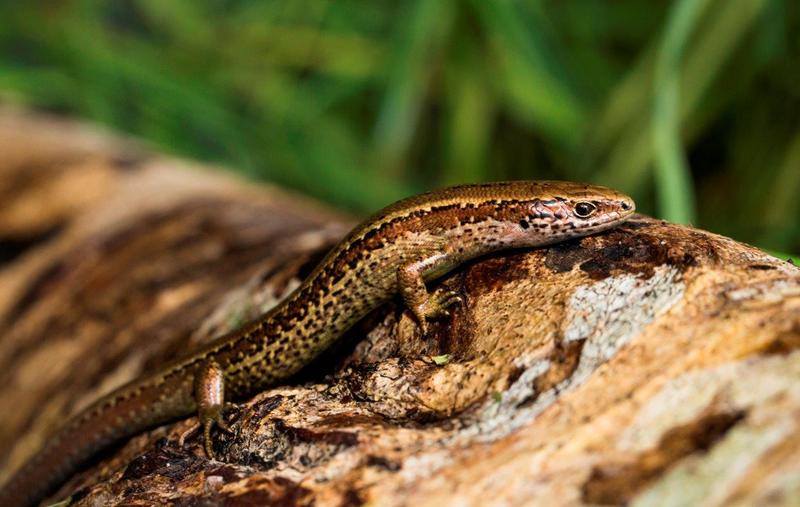
7. Chesterfield skink (Oligosoma
aff. infrapunctatum)
8. Coastal pepper cress (Lepidium
banks)
9. Eyelash seaweed (Dione
arcuata)
10. Dune swale daphne (Pimelea act)
10. Dune swale daphne (Pimelea act)




Wednesday, 15 June 2016
View the Endangered Species Foundation of New Zealand's website!
Protecting New Zealand's extraordinary species - no extinctions on our watch!
Find out more here: http://www.endangeredspecies.org.nz


Like us on Facebook!
Did you know that the Endangered Species Foundation of New Zealand which runs this blog, is also on Facebook (and Twitter)?
Please like and share our page, see: https://www.facebook.com/ESFNZ/

Tuesday, 8 March 2016
Dunedin Climate Could Be Key To Survival Of Nelson's Endangered Coastal Peppercress
Dunedin’s notorious weather may hold the key to the survival
of Nelson’s coastal peppercress (Lepidium
banksii). Seedlings of this critically endangered species are being grown in
a cooler climate at Dunedin Botanic Garden’s new propagation facility, in an innovative
approach to safeguard the species from extinction.
Dunedin ecologist, Dr Mike Thorsen, organised the conservation
programme on behalf of the recently launched Endangered Species Foundation of New
Zealand (ESFNZ), and is also growing some of the plants. He believes the species
should grow well in the absence of the pests and diseases that ravage its
remaining natural populations.
 |
A wild coastal peppercress plant on the Nelson coast (Photo: Department of Conservation).
|
“Coastal peppercress is a hardy plant adapted to the tough
north-west Nelson coastal environment. But it has proved vulnerable to a large
number of exotic pests and diseases: diamond back moth, pigs, several species
of weeds, white rust, white cabbage butterfly, grey aphids, rabbits, hares,
rats, mice, possums, snails, slugs, white fly and turnip mosaic virus”, said Dr
Thorsen. “There was even an instance of a deer falling over a cliff onto a
ledge inhabited by coastal peppercress and it ate everything it could reach”,
he added.
Dr Thorsen said that the species would probably be extinct
if not for the hard and persistent efforts of three Department of Conservation
(DOC) workers.
Shannel Courtney of DOC, who has been protecting coastal
peppercress for nearly twenty years, says the work is daunting, and for every
sign of progress there would then come a set-back, “be it disease, a storm, or
an unusually high tide dumping tonnes of driftwood on plants”. He and
co-workers, Simon Walls and Roger Gaskell, together with other helpers over the
years, attempted to establish populations at new sites as well as bolstering
the last of the wild populations. “Unfortunately, our efforts have not been
successful in increasing the number of coastal peppercress, and it is time to
try fresh approaches”, said Mr Courtney.
 |
Alice Lloyd-Fitt, Dunedin Botanic Garden’s Propagation
Services Officer oversees apprentice Lucy Parsons sowing coastal peppercress
seed in the new cultivation facility at the Dunedin Botanic Garden (Photo: Mike Thorsen)
|
It is thought that the cooler climate of Dunedin may mean
that there are fewer pests and diseases present which would allow coastal
peppercress plants to thrive. The Dunedin Botanic Garden Manager, Alan
Matchett, says the role of the Botanic Garden is changing, and they are
becoming more involved in conservation
programmes by providing their expertise in growing “difficult” plant species
and using their state-of-the-art propagation facility which opened last year.
“We are intrigued by the challenges posed in growing coastal
peppercress, and our involvement means that we not just answer the question ‘do
we need to grow coastal peppercress in cooler environments?’, but we can also
harvest seed from the plants grown here and these can be used to bolster the
populations back in Nelson”, says Mr Matchett.
 |
Seedlings of critically endangered coastal peppercress growing
at Dunedin Botanic Garden (Photo: Liz Sherwood)
|
The coastal peppercress seeds were sown in December and
germinated through January and February, with an approximate 60% rate of
germination success. Dunedin Botanic Garden Propagation Services Officer Alice
Lloyd-Fitt says they are now growing 89 healthy seedlings.
The Endangered Species Foundation is pleased to be
supporting this work. The Foundation was launched in October last year with the
publication of its list of NZ’s ten most endangered species, of which coastal
peppercress is number eight. Foundation chairperson,
Kerry Prendergast, says “We want to help those who are working so hard to protect
our rarest species. We also want to help facilitate innovative conservation
efforts, such as this”.
The group has already raised over $1.5 million of its $30
million target.
Dr Thorsen said, “We’ve already lost two species of
peppercress, and the remaining 18 endemic species are all close to becoming
extinct for many of the same reasons as those threatening Nelson’s coastal
peppercress. It would be a huge blow to lose plants that were once an important
diet of Maori and were gathered by the ‘boatload’ by Captain Cook to ward off
scurvy in his sailors. “What we learn with the coastal peppercress could be
used to help these other species”, he said.
Volunteers are needed in Nelson to
care for the remaining wild plants. Volunteers should contact DOC’s Takaka
Office.
For more information on coastal peppercress please visit:
ESFNZ’s 10 most
endangered species http://www.endangeredspecies.org.nz/projects/10-most-endangered
New Zealand Plant
Conservation Network website search ‘Lepidium
banksii’ (coastal peppercress) http://www.nzpcn.org.nz/flora_details.aspx?ID=20
Sunday, 21 February 2016
Trustee Vacancy - Expressions Of Interest Invited
Expressions of interest are invited for the role of Trustee for the Endangered Species Foundation of New Zealand.
Launched in October 2015, the Endangered Species Foundation of New Zealand (ESFNZ) is a registered charitable organisation supporting high-priority conservation projects that protect New Zealand’s most vulnerable indigenous species and habitats.
The Endangered Species Foundation aims to provide the sustainable, long-term support needed for conservation work at the frontline via a $30 million endowment fund. We provide a way for all New Zealanders to get involved and to make a lasting contribution. Dedicated to protecting our endangered species and habitats, trustees’ guidance ensures resources are allocated responsibly and to where they are needed most to best achieve our goals. Current trustees are Kerry Pendergast (Chair), Neil Thorsen, Richard Allen, Richard Dore, Grant Leach, Geoff Ross, Philip Seddon and Jacqueline Beggs.
The vacancy is to add one more Trustee with the appropriate expertise and connections to bring a Māori perspective to the Foundation. The position is open until filled. Further information is available from www.endangeredspecies.org.nz or info@endangeredspecies.org.nz.
Monday, 7 September 2015
What Next?
We are currently developing priority conservation project proposals that, when funded, will help secure species most at risk of extinction. These ‘priority projects’ will be on our website so anyone can read about what needs to be done, and can be inspired to donate to, or sponsor, a project. Each project proposal covers:
- a biography of the species or habitat, including estimated population;
- why it is a priority for protection;
- what has already been done to help it;
- what still needs to be done to prevent its extinction;
- and, how much it will cost.
This will be great for Ambassadors, who can point potential donors to these pages on our website. Abbreviated project outlines will also soon be available in hard copy as an attractive booklet. Acumen Republic is currently working on this publication designed specifically for Ambassadors to give to potential donors.
 |
| The Mokohinau stag beetle - one of ESF's priority species. Photo Andrew Townsend/DOC/MONZ |
Dr Mike Thorsen (ESFNZ Advisor) has been coordinating a multi-agency approach to “resurrecting the living dead” at Makara, on Wellington’s south coast. ESFNZ has attracted $200,000 in funding for the project from the Stout Trust, Nikau Foundation and local benefactors. The aim of the project is to reintroduce threatened plants to the area, in turn, providing natural habitat for threatened wildlife and opportunities for recreation. We are currently waiting on notification from Meridian on a funding application, before making a final decision on whether to proceed with the project with the current level of funding.
Planning is underway for our launch function at Zealandia, in Wellington, in late October/early November this year. Watch this space!
Zealandia received $10,000 from a local benefactor to replace two existing tuatara enclosures. Raewyn Empson, Manager of Conservation, Research and Education at Zealandia, said staff were disappointed to find the existing plywood enclosures rotting after only several years. Staff are now redesigning them to build an enclosure that will last but still meet husbandry requirements. With the animals currently in torpor (a state of decreased physiological activity), Raewyn says they plan to have the new enclosures ready for the tuatara once they become more active in September or October.
We are grateful to the Graham Hirst Kitney Charitable Trust for granting $10,000 to help purchase equipment for the development of a captive-breeding facility for endangered New Zealand insects at Lincoln University.
Wednesday, 8 October 2014
A New Presence
Right now, our website is being loaded
with all our information and images – with the plan to go live in the next couple of weeks.
This is a hugely important step for
ESFNZ. It’s slow-going growing a network of support without an internet
presence, and it’s hard to help people if they haven’t heard of us and can’t
‘google’ us!
The new website marks a transition for
ESFNZ into a new phase of work. One where we reach out to people and:
- grab their interest
- get people talking more about species and habitat protection
- share sound information on species and habitat protection
- keep them informed on conservation issues
- inspire donations, sponsors and support.
As a supporter, we invite you to give
us your feedback on the website and ideas on what you would like to see. Can
you find the information you want?
Check for our website from late October
at www.endangeredspecies.org.nz
Wednesday, 4 June 2014
Determining NZ’s Top 10 Endangered Species
Species under consideration for the ranking of NZ’s most endangered species include some well-known and
lesser-known species:
·
Maui’s dolphin
·
South Island
long-tailed bat
·
Canterbury
mudfish
·
New Zealand sea
lion
·
Black-billed gull
·
Hamilton’s frog
·
land snails
(including Powelliphanta spp.)
·
moths
·
herbs (including
myosotis, linum, lepidiums, hypericums and pimeleas)
·
shrubs (hebe,
kaka beak, native broom, olearia)
·
albatrosses
·
shags
·
marine
invertebrates
·
freshwater
invertebrates
·
fungi
·
beetles
·
gall mite
Lepidium kirkii – ‘Top 10’ contender
 |
| Lepidium kirkii habitat Photo: Mike Thorsen |
This tiny relative of the cabbage only inhabits very dry salty clays of Central Otago. What remains of its habitat are tiny scattered sites. In total, Lepidium kirkii occupies an area that would fit in most people's lounge, despite once being common on Central Otago's valley floors.
These tiny remnants are being swamped by weeds, being harvested for their clay, or being over-watered be irrigation systems. Also of concern is the invasive Albugo fungus that has been found in all remaining populations.
Is our decision-making system robust?
Our Advisory Group has developed what
we believe is a robust decision-making system for determining NZ’s most endangered
species. Email Liz (lsherwood@ihug.co.nz) if you would like a copy of our decision-making system, for interest or to comment on. Let us
know if you think we are missing or over-emphasising any factors.
Scientists (mainly from the Department
of Conservation) are now providing the Advisory Group with population details
and threat information for species that are contenders for NZ’s ten most
endangered species.
Contenders were identified using species
data from the NZ Threat Classification System. We prioritised species categorised
as Nationally Critical (the category closest to extinction), and removed
species that are secure outside of NZ. Species are retained that qualified under NZ Threat Classification System Criteria B “Small population (natural or unnatural)
with a high ongoing or predicted decline” or Criteria C “Population
(irrespective of size or number of sub-populations) with a very high ongoing or
predicted decline (> 70%)”, or if there has been a negative change in their
category assessment since their previous assessment.
Experts
viewing the prioritised list of Nationally Critical species have identified additional
Nationally Critical marine invertebrates, freshwater invertebrates and fungi
that were missing from the data.
To
date, there are 60 species (including sub-species) under consideration for the
top ten places. We will soon have enough specific population and threat data
for our Advisory Group to apply the final analysis (Step 5 of the Decision
System) to a complete and accurate list of
most-endangered species.
Sunday, 13 April 2014
ESFNZ Receives DOC's Support
Kia ora
I am Liz Sherwood and I am here to support ESFNZ’s Board of Trustees, thanks to a generous grant made by the Stout Trust. My role includes communications,
funding and marketing support, and working with the Advisory Board. My passion
is conservation advocacy in the written form. My background is science,
ecology, weeds, conservation advocacy, working with conservation volunteers,
writing and editing. I feel very lucky to be part of this incredible
initiative.
First job
Start writing a regular newsletter to share with our
supporters. Here is the first issue: The
Rarest of the Rare #1 (PDF)
The Advisory Group’s first job
Now that our Advisory Group has formed, they are working on
their first task – to develop a robust decision-making system for determining which species are NZ's most endangered. The resulting list of the top ten 'rarest of the rare' species will be a powerful tool, both to attract
media to our official launch in July, and to attract funding to support those
species. I’ll get back to you with developments.
ESFNZ receives DOC’s support
Meetings with Lou Sanson (Director-General of Conservation)
have been very productive. We now have the practical support of the Department
of Conservation. Achieving this milestone is essential for the credibility and
strength of our Foundation.
Mike Thorsen and Trustees have also been busy approaching
heads of big businesses to secure financial support - with some great successes
and progress being made.
NEXT Foundation
News of the formation of NEXT Foundation is exciting and
encouraging because they can invest in large-scale and long-term environmental projects. We now have another potential source of significant funds
that we can apply for. Expressions of Interest (pre-application forms) can be submitted in June (www.nextfoundation.org.nz).
Our website (in ‘Phase 1’ form) is almost ready. Thanks to
Acumen Republic it is looking fantastic. We can’t wait to share it!
Wednesday, 4 December 2013
An Overdue Update
Apologies for the long gap between posts - it's not because nothing has been happening, but because we've been a too busy!
What has been happening?
We now have charitable status.
We have the very talented Elise Lepple working on marketing material.
We nearly have a full complement of world-leading experts in our Advisory Group. We are hugely thankful to:
- David Mules (WWF-Tindall Foundation Connecting Northland Project).
- Assoc. Professor Philip Seddon (Department of Zoology, University of Otago).
- John Barkla (Ranger Partnerships, Department of Conservation).
- Rebecca Stanley (Partnership and Education, Auckland Botanic Gardens).
- Dr Colin O'Donnell (scientist, Department of Conservation).
- Dr John Innes (scientist, Landcare Research).
- Dr James Russell (Senior Lecturer, Auckland University).
- Clayson Howell (Technical Officer, Department of Conservation).
- Dr Marieke Lettink (FaunaFinders).
- Dr Warren Chinn (Technical Officer, Department of Conservation).
- Dr Robin Mitchell (Golder Associates)
We're still on the lookout for good marine, freshwater and community/Iwi liaison people (if anyone knows any body particularly talented in either of these fields then please let me know).
We've met the Minister of Conservation and will soon meet the new Director General of the Department of Conservation.
We're in discussion with various groups to gain their support in conservation initiatives.
We've got various funding bids in to help get us started.
Early indications are that we may have raised over a million dollars already (more on that in a later post).
 |
| Flock of endangered brown teal (Anas chlorotis) that have been released into a new site on the Coromandel Peninsula. Brown teal were common throughout NZ but the South Island subspecies was declared extinct last month. The North Island subspecies was struggling with potentially viable populations only occurring at two or three sites in the last decade. A concerted effort by several organisations has improved the situation, but there is still a long way to go. These birds are at a flock site where they choose their mate for the coming breeding season. |
Thursday, 18 July 2013
Image Is Everything
The Endangered Species Foundation of NZ now has a professional image developed by Acumen Republic:

The logo was developed to contain themes of land, air and water based on a caring heart background. We also wanted it to look professional and crisp and of course distinctive. We think Acumen have pulled off this brief superbly.
Elements of this logo can be used in different ways and combined with other devices in our publications and communications. Having a good image to give a good professional first-impression for the Endangered Species Foundation is critical and we're looking forward to taking it out to the New Zealand community.
Acumen undertook this work pro-bono as the staff and managers wished to
be involved in a worthwhile cause that they could support using their
specific talents. We think they are showing what forward looking companies value - a business that integrates with its community to the benefit of both.
Our next step is to develop our promotional material. Again, Acumen are very generously and professionally supporting us in this.
Tuesday, 26 March 2013
A Reality!
The Endangered Species Foundation of New Zealand is now a legal entity!
 |
| Dame Cheryll Sotheran, Prof. Sir Alan Mark, Kerry Prendergast, Neil Thorsen, Dr Jane Marshall, John Walsh (Acumen Republic) and Richard Allan at the signing of the Foundation's Trust Deed. Richard Dore absent. |
It has taken a lot of work by many people over the past couple of months with fantastic support from Kensington Swan Lawyers to develop our Trust Deed, which was signed by our Trustees on the 18th March.
The Mission of the Endangered Species Foundation is:
"to
provide a professional funding organisation through which successful projects
are completed to help achieve the Goal of preventing any further extinctions of
New Zealand’s unique indigenous biodiversity and their habitats”
Our objectives are to:
1) support the active
conservation of New Zealand’s unique places, plants and animal life, particularly
for those species that are at risk of extinction;
2) prevent further
extinctions by facilitating the implementation of world-leading efficient and effective management programmes
for those species in imminent risk of extinction (the “rarest of the rare”);
3)
support research
that provides conservation managers with tools that can be used to redress the
threats to New Zealand’s indigenous biota;
4) assist and
cooperate with persons and organisations sharing similar aims;
5) facilitate the
hands-on involvement of local communities;
6) provide
information to interested parties, including local and central government about
the appropriate management of endangered species.
Being a legally-recognised body means we can now progress to raising funds for supporting urgent conservation projects, and to help us with this we have been busy preparing a start-up business plan. This business plan explains how we plan on raising our $30 million fund!
An important spectator to the signing of the Trust Deed was John Walsh from the communication company Acumen Republic. More on this very exciting development in the next post!!
If you would like a copy of our Business plan email Mike mike.thorsen@xtra.co.nz. A copy of the Trust Deed will be available once we have been approved as a charitable organisation.
Subscribe to:
Posts (Atom)